
 Log In
 Create account

How to Strengthen Your Respiratory Health Naturally 🌿💨
Our respiratory system works hard every day—bringing...
READ MORE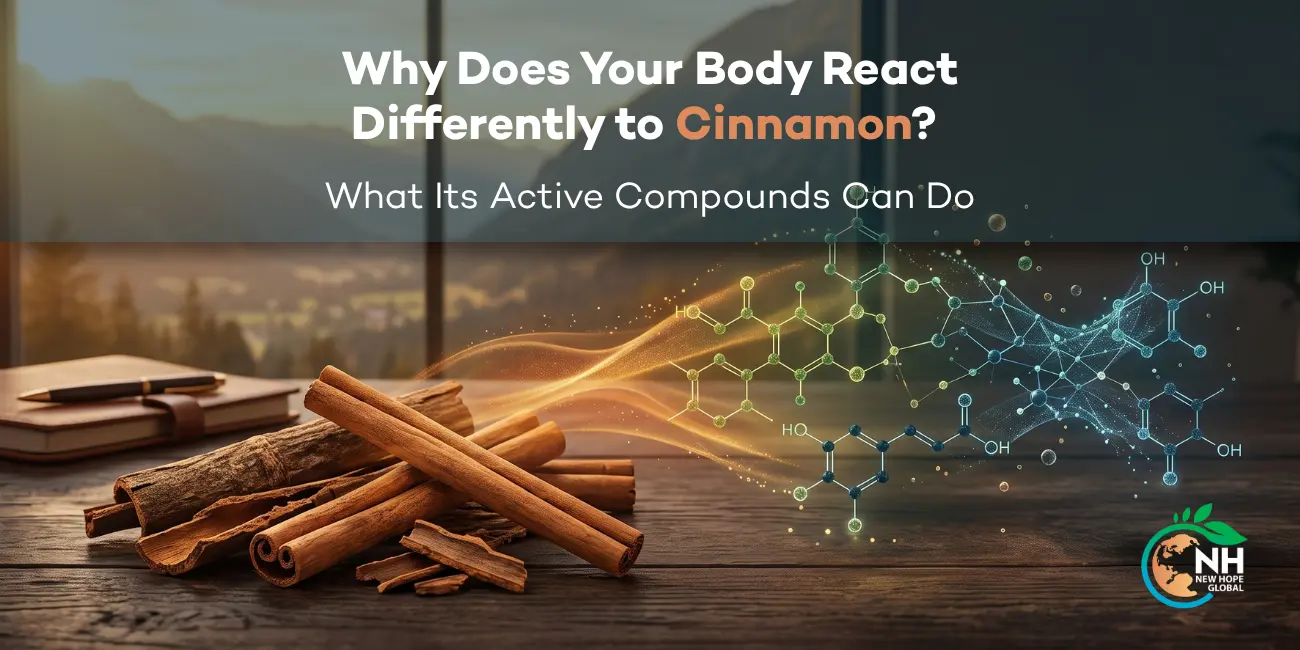
More than just a warming spice, cinnamon contains naturally occurring compounds that have attracted scientific interest. But why can its effects vary from person to person, and what makes its essential oil particularly interesting?
Cinnamon is one of the world's oldest and most widely used
spices. We add it to coffee, breakfast bowls and desserts, often appreciating
its distinctive aroma and flavour. But cinnamon is more than a culinary
ingredient.
It contains several naturally occurring bioactive compounds
that researchers have investigated for their potential effects on metabolism,
oxidative stress and other processes in the body. Interestingly, not everyone
responds to cinnamon in the same way. Here's why.
Not All Cinnamon Is the Same
One reason people may experience different responses to
cinnamon is that not all cinnamon has the same chemical composition.
The two best-known varieties are Ceylon cinnamon (Cinnamomum
verum) and Cassia cinnamon (Cinnamomum cassia). They differ in their
natural compounds, including their levels of aromatic oils and coumarin.
Other factors can also influence how the body responds:
This means that the word "cinnamon" does not
necessarily describe the same nutritional or botanical profile in every
product. The National
Center for Complementary and Integrative Health (NCCIH) also highlights
important differences between cinnamon varieties and their safety
considerations.
Cinnamaldehyde: The Compound Behind Cinnamon's Aroma
Have you ever noticed cinnamon's distinctive warm, slightly
sweet smell? Much of it comes from cinnamaldehyde, one of the main
aromatic compounds found in cinnamon bark essential oil.
But its significance goes beyond its smell.
Researchers have investigated cinnamaldehyde for several
potential biological activities, including:
A scientific
review published in 2017 explored cinnamaldehyde's pharmacological
properties, including its potential relationship with glucose metabolism and
diabetes-related pathways.
Some findings are promising, but much of the mechanistic
evidence comes from preclinical research. More human studies are needed to
establish meaningful health effects.
Cinnamon's Polyphenols: Another Part of the Story
Cinnamon also contains polyphenols, including
procyanidins and other phenolic compounds.
These plant-based compounds are particularly interesting
because of their antioxidant activity. They have been studied for their
potential involvement in glucose metabolism and insulin-related signalling
pathways.
Human clinical studies have also investigated cinnamon
supplementation in relation to blood glucose levels. A 2015 review of experimental
evidence and clinical trials examined the relationship between cinnamon
consumption and glycaemic outcomes.
Some studies reported improvements in certain blood glucose
measurements, although results were inconsistent and depended on the cinnamon
preparation, dosage and participants.
This is why cinnamon remains an interesting subject of
nutritional research rather than a proven treatment for metabolic conditions.
Why Combine Cinnamon With Other Nutrients?
Cinnamon's aromatic compounds and polyphenols are only one
part of the bigger nutritional picture.
Other nutrients have their own established physiological
roles:
Combining different ingredients allows a formula to bring
together several nutritional components with different roles.
Meet ENHANCE CINNAMON: A Special Edition Formula
This is where ENHANCE
CINNAMON comes in.
It brings together everything found in the original ENHANCE
formula, with the addition of organic cinnamon essential oil.
The formula contains:
The result is a special edition that combines the
nutritional foundation of ENHANCE with the distinctive aromatic character of
cinnamon essential oil.
The simple answer
Your body may respond differently to cinnamon because its
composition, concentration and form can vary, while individual metabolism and
other biological factors also influence how ingredients are processed.
Cinnamaldehyde and polyphenols are two particularly
interesting groups of cinnamon compounds, with research exploring their
potential roles in metabolic processes and antioxidant activity.
ENHANCE CINNAMON brings this botanical ingredient into an
existing formula of D3, K2, Resveratrol and three organic cold-pressed oils,
creating a distinctive combination of daily nutrients and cinnamon essential
oil.
Educational disclaimer: This article is for informational
purposes only and is not intended to diagnose, treat, cure or prevent any
disease. Food supplements should not replace a varied, balanced diet and
healthy lifestyle. Consult a healthcare professional before using supplements
if you take medication or have an existing health condition.
Our respiratory system works hard every day—bringing...
READ MORE
Vitamin C is one of the most essential nutrients...
READ MORE
Chronic Fatigue Syndrome (CFS) can feel like running on an empty battery...
READ MORE
In today’s world, many of us spend hours sitting—whether...
READ MORE