 Log In
 Create account

Natural Relief for Joint Pain
Joint pain can be a daily struggle, affecting Mobility, comfort, and overall well-being. While conventional treatments...
READ MORE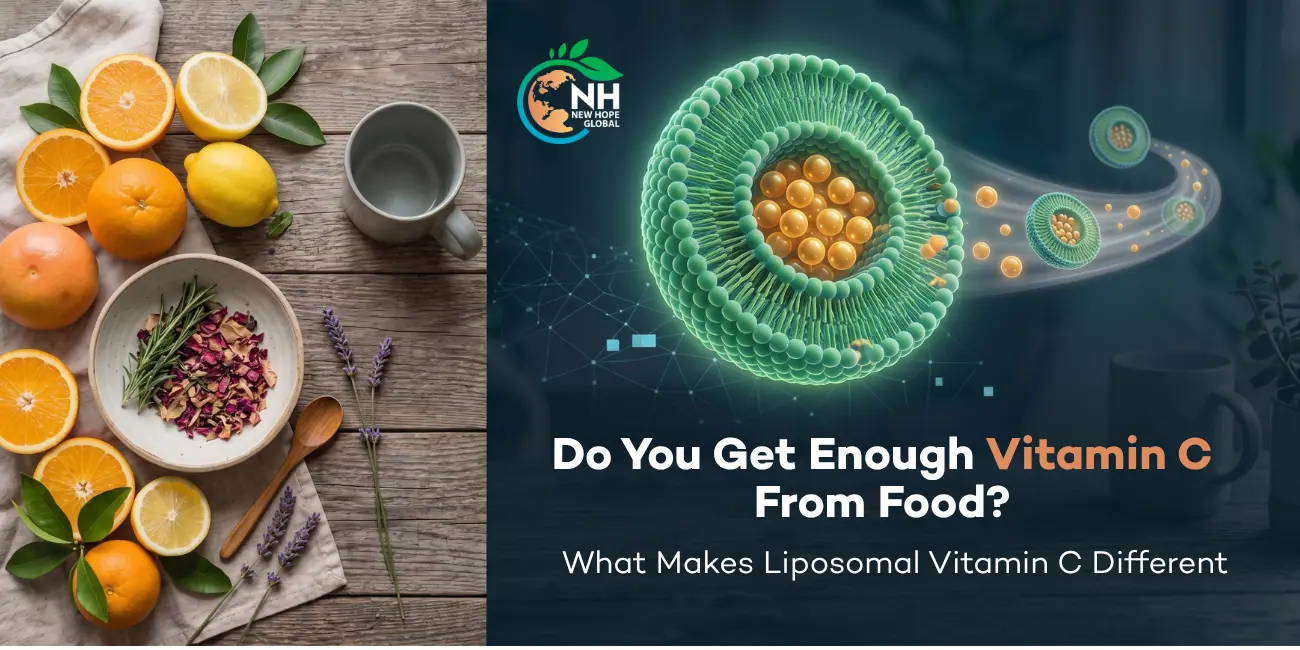
You may
be getting plenty of vitamin C from your diet — but that doesn't necessarily
mean your body is absorbing all of it.
Vitamin
C is one of those nutrients most people associate with oranges and other
fruits, so it can seem easy to get enough from food. But there is another part
of the equation that is often overlooked: how much vitamin C your body
actually absorbs and uses.
So, is
getting vitamin C from food enough? And what makes liposomal vitamin C
different?
1.
How much vitamin C do you get from food?
Fruits
and vegetables are excellent sources of vitamin C. Citrus fruits, kiwi,
strawberries, peppers, broccoli and other vegetables can all contribute
significantly to daily intake.
Vitamin
C is also an essential water-soluble nutrient involved in several important
processes in the body. It contributes to normal immune function, collagen
formation, protection of cells from oxidative stress and normal energy-yielding
metabolism.
Importantly,
vitamin C from food is not fundamentally a different vitamin from the ascorbic
acid used in supplements. Research comparing synthetic and food-derived vitamin
C has found that they are chemically identical, although foods also provide
other nutrients and plant compounds that may influence how the nutrient is
delivered in the diet. Read
the research on PubMed.
For many
people, a varied diet can therefore provide a substantial amount of vitamin C.
But when supplementation is used, the form of vitamin C becomes another
consideration.
2.
Why does absorption matter?
Vitamin
C absorption is not simply a case of "more in means more in the
body."
Human
research has shown that vitamin C absorption follows dose-dependent kinetics.
At higher single doses, the proportion absorbed decreases, while more vitamin C
is eliminated through urine. A classic pharmacokinetic study found that
absorption was complete at around 200 mg as a single dose, while
bioavailability declined at doses of 500 mg and above. Explore the study on PubMed.
This is
one reason researchers have become interested in different delivery systems —
including liposomal vitamin C.
3.
What makes liposomal vitamin C different?
Liposomal
vitamin C uses tiny lipid structures called liposomes to encapsulate the
vitamin C. The idea is that these structures can help deliver vitamin C through
the digestive system and influence how it is absorbed.
And
there is human research behind this concept.
In a
2024 randomized, double-blind, placebo-controlled crossover trial involving 27
healthy adults, researchers compared 500 mg of conventional vitamin C with 500
mg of liposomal vitamin C. The liposomal form produced higher peak vitamin C
concentrations and greater overall exposure in both plasma and leukocytes. Read the full study on PubMed.
A 2025
scoping review examining 10 studies also found that most of the studies
reported higher bioavailability with liposomal vitamin C, although the
researchers emphasized that different formulations and doses make direct
comparisons difficult and that more research is needed on cellular uptake and
biological effects. See the
review on PubMed.
So,
liposomal doesn't automatically mean "better" in every situation.
What the research suggests is that the delivery format can influence vitamin
C bioavailability.
4.
Why combine food with a convenient supplement?
The goal
doesn't have to be choosing between food and supplements.
A diet
rich in fruit and vegetables provides vitamin C alongside fibre, minerals and
other beneficial compounds. A supplement can simply offer a convenient and
consistent way to add vitamin C to your routine when needed.
This is
where VitaC from
NH Global fits in. VitaC is a liposomal vitamin C formula designed for
convenient daily use, with the vitamin C delivered in a liposomal format.
For an
even easier routine, VitaC Powder provides liposomal vitamin C in
convenient powder form that dissolves into a refreshing drink —
making it simple to add vitamin C to your day without relying on tablets or
capsules.
The
simple answer
Getting
vitamin C from food is an important part of a balanced diet, and fruits and
vegetables remain excellent sources.
But when
using a supplement, the amount of vitamin C is only part of the story.
Research suggests that liposomal delivery can increase vitamin C
bioavailability compared with conventional forms, although the evidence is
still developing and results can vary between formulations.
In other
words, it isn't necessarily about getting more vitamin C. It can also be
about how that vitamin C is delivered.
Research
used in this article
This
article is for educational purposes only and is not intended to replace a
varied, balanced diet or professional medical advice. Food supplements should
be used according to the recommended daily intake.
Joint pain can be a daily struggle, affecting Mobility, comfort, and overall well-being. While conventional treatments...
READ MORE
Inflammation is a natural response by your immune system to protect your body from harm. While it plays...
READ MORE
Grape seed oil, derived from the seeds of grapes left over from winemaking, has gained recognition as a powerhouse ingredient for...
READ MORE
As we age, preserving brain health becomes increasingly important. Cognitive decline can...
READ MORE